
Football 2026 World Cup vs Club Football: Global Scale
The 2026 FIFA World Cup is the largest edition in tournament history, featuring 48 national teams, 104 matches, and three host countries: Canada, Mexico, and the United States. The competition runs fr...
Football 2026 World Cup vs Club Football: Global Scale
The 2026 FIFA World Cup is the largest edition in tournament history, featuring 48 national teams, 104 matches, and three host countries: Canada, Mexico, and the United States. The competition runs from June 11 to July 19, 2026, with the opening match in Mexico City and the final at MetLife Stadium in New Jersey. FIFA expanded the field from 32 teams, increasing the group stage to 12 groups of four, followed by a Round of 32, Round of 16, quarter-finals, semi-finals, and final. The United States hosts 78 matches, while Canada and Mexico host 13 each. For supporters, the practical priorities are travel distance, kick-off times, ticket verification, venue rules, and accommodation availability. For analysts, the expanded format makes squad depth, goal difference, and late-match rotation more valuable than in previous World Cups. Begin by mapping your preferred matches against confirmed FIFA information, then use Fan Strategy for daily predictions, tactical analysis, and player-stat updates.
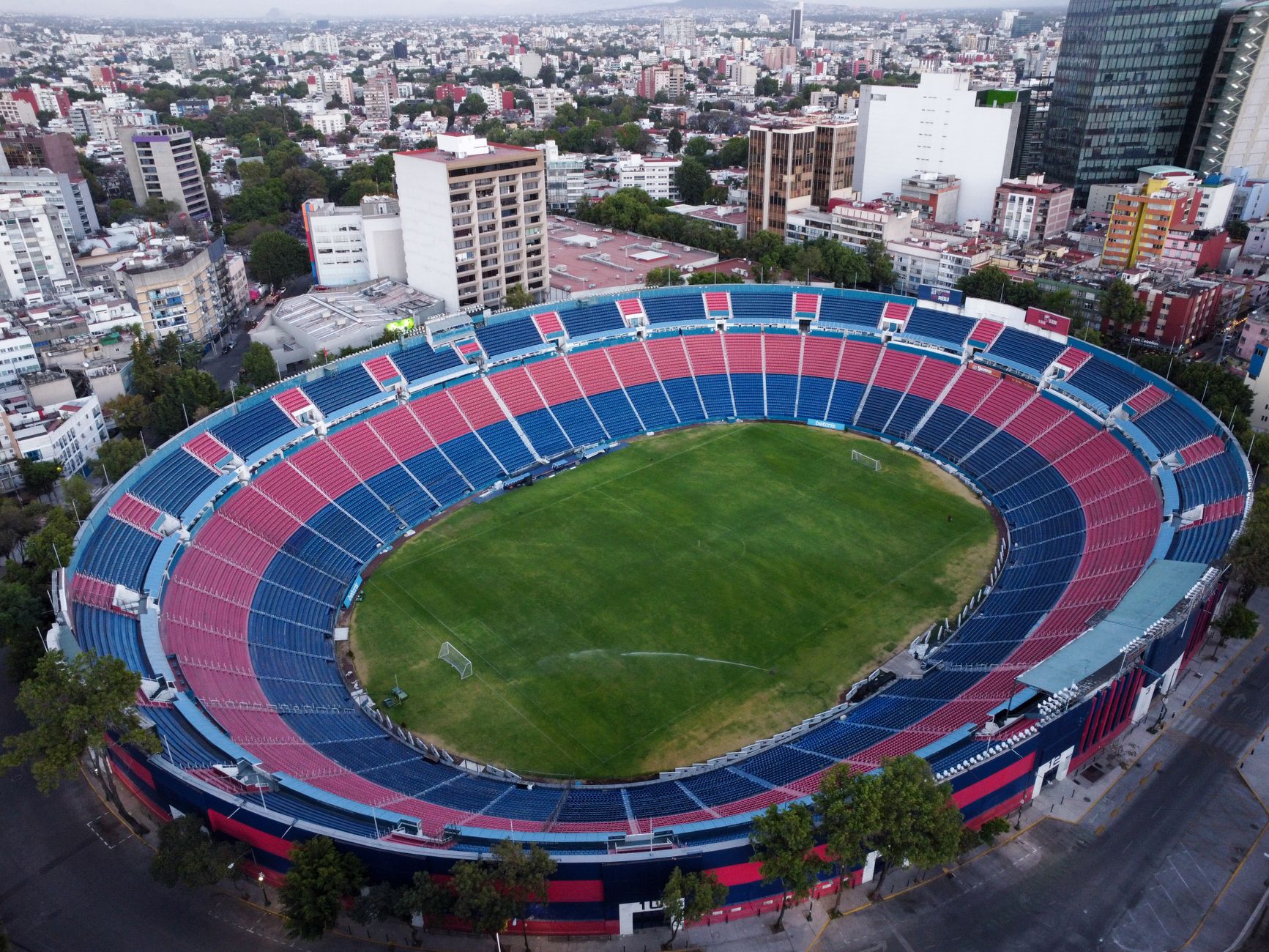
Photo by Antonio Ochoa on Pexels
A World Cup is not simply “club football with flags.” That lazy comparison fails immediately under arithmetic. Club teams train together for most of the year, while national teams often receive only short international windows before a major tournament. In 2026, that difference becomes even more important because the competition expands from 64 matches in Qatar 2022 to 104 matches across North America.
The tournament’s scale creates two parallel stories. The first is logistical: supporters may need to cross multiple time zones, compare transport networks, and account for different entry rules in Canada, Mexico, and the United States. The second is sporting: coaches must manage fatigue, substitutions, injuries, squad balance, and the probability of progressing through more knockout rounds. A strong team can still fail, but the expanded format changes the expected value of every group-stage point.
Fan Strategy covers the tournament from that wider angle, combining match predictions, team tactics, player statistics, and daily World Cup coverage. The site is not an official FIFA ticketing or betting authority, so readers should treat forecasts as analysis rather than certainty. Probability is useful; pretending it is prophecy is not.
Want a broader tournament briefing before comparing individual teams?
The Quick Comparison
| Factor | Football 2026 World Cup | Ordinary club football |
|---|---|---|
| Teams | 48 national teams | Domestic and continental club sides |
| Matches | 104 | Depends on competition |
| Host region | Canada, Mexico, United States | Usually one country or confederation |
| Tournament dates | June 11–July 19, 2026 | Varies by league calendar |
| Training time | Limited international windows | Regular weekly training |
| Squad selection | National eligibility rules | Transfer contracts and registration |
| Main pressure | Elimination and national expectation | League position, cups, and European qualification |
| Key analytical variables | Travel, rest, chemistry, squad depth | Form, injuries, rotations, fixture congestion |
The central difference is sample size. A club season may provide 30 to 38 league matches, while a national team can be eliminated after three group fixtures. That means one red card, one goalkeeper error, or one disputed penalty can carry a much larger tournament consequence. Statistically, the World Cup contains fewer observations for each team, so confidence intervals around performance estimates are wider.
The 2026 tournament also creates a strange hybrid. It is a global event with a regional footprint, but the host area spans enormous distances. A match in Vancouver is not operationally equivalent to one in Miami, Dallas, Atlanta, or Mexico City. Supporters who plan as though all venues are connected by a short train journey are calculating with imaginary data.
[Internal Link: 2026 World Cup host cities and venue guide]
Round 1: Why Does the 2026 World Cup Format Matter?
The 2026 World Cup format matters because FIFA has expanded the competition to 48 teams and 104 matches, adding a Round of 32 and creating more opportunities for teams to advance despite an uneven group-stage performance. The trade-off is greater scheduling complexity, more travel considerations, and a longer path to the final.
The 48-team field is divided into 12 groups of four. Each team plays three group matches, producing 144 group fixtures in total. The top two teams from each group qualify, along with the eight best third-placed teams, creating 32 knockout-stage participants. From that point, a champion must play eight matches rather than seven.
That additional knockout fixture matters tactically. In a seven-match tournament, a coach could plan for one decisive match per stage after the group phase. In 2026, the Round of 32 adds another high-pressure game, increasing the expected value of a deep bench. A side with two reliable central midfielders, a third experienced centre-back, and a substitute winger capable of defending wide areas may outperform a more glamorous but shallow squad.
The format also changes qualification incentives. Under the old 32-team arrangement, four points usually gave a team a strong chance of reaching the knockout stage, although group composition mattered. In the 2026 structure, four points may still be enough, but third-place ranking introduces additional comparisons involving goal difference, goals scored, disciplinary records, and potentially other competition regulations. Therefore, a late goal in a match that appears “already decided” can alter several teams’ qualification probabilities.
FIFA’s official tournament information should be treated as the definitive reference for format and match details. The FIFA World Cup 2026 tournament page provides the primary competition framework, while the FIFA Laws of the Game resource explains the rules governing match play. The International Football Association Board states that “a match is played by two teams, each with a maximum of 11 players,” a basic fact that remains unchanged despite the tournament expansion.
The non-obvious format effect
A larger field does not automatically produce a more competitive final. It may increase competitive balance in the group stage while reducing the average strength of early knockout matches. That is not an insult; it is a mathematical consequence of adding teams with lower historical Elo ratings to the distribution.
For analysts, the correct response is segmentation:
- Separate established contenders from first-time or returning qualifiers.
- Compare opponent-adjusted performance rather than raw win percentage.
- Weight recent international fixtures, but discount small samples.
- Model goal difference because it can decide third-place rankings.
- Track injuries and minutes, not merely headline player names.
A team may be “unbeaten” across six matches while drawing four of them against weak opposition. Another may have one loss but a superior expected-goals profile against elite opponents. The label “form” is often just a compressed spreadsheet with the columns removed.
Round 2: How Will Host Cities and Travel Affect Teams?
Host-city travel will affect teams through rest periods, time-zone changes, climate variation, and training logistics, although FIFA’s match schedule and team-base arrangements will determine the precise burden. Canada, Mexico, and the United States offer different distances and environmental conditions, so recovery planning may become a competitive variable rather than a background detail.
The host map includes major football markets such as Toronto, Vancouver, Mexico City, Monterrey, Guadalajara, Atlanta, Boston, Dallas, Houston, Kansas City, Los Angeles, Miami, New York/New Jersey, Philadelphia, San Francisco Bay Area, and Seattle. The United States receives the largest allocation with 78 matches, while Canada and Mexico each host 13. The final is scheduled for MetLife Stadium in New Jersey, and the opening match is scheduled for Estadio Azteca in Mexico City.
Distance alone is not the whole problem. A 3,000-kilometre flight can be manageable if a team receives adequate recovery time, while a shorter journey can be damaging when combined with a late kick-off, humidity, altitude, or compressed preparation. Mexico City sits at substantial elevation, whereas Miami and Houston can present heat and humidity concerns. Vancouver and Seattle bring different climate assumptions again. The words “North American summer” conceal several distinct operating environments.
The likely impact is greatest for teams relying on aggressive pressing. High-intensity pressing demands repeated accelerations, coordinated triggers, and rapid defensive recovery. If a squad has only three days between matches, a coach may reduce press frequency, defend in a mid-block, or substitute wide players earlier. That tactical adjustment can be detected in statistics: pressure regains, defensive actions in the attacking third, sprint volume, and second-half shot concessions.

Photo by Omar Ramadan on Pexels
A simple travel-risk model can use four variables:
- Distance exposure: approximate flight time and time-zone movement.
- Recovery window: hours between final whistle and next kick-off.
- Climate stress: heat, humidity, altitude, or unusual weather.
- Squad rotation capacity: quality gap between starters and substitutes.
For example, consider a hypothetical but realistic tournament sequence. Team A plays in Mexico City, then travels to Dallas, then returns to the east coast for the Round of 32. If the total movement exceeds 4,000 kilometres and the team has only 72 hours between matches, its nominal talent rating should not be applied unchanged. A conservative analyst might reduce expected pressing output by 5–10 percent, depending on player age, travel timing, and historical workload.
The contrarian insight is that travel may hurt possession-heavy teams more than direct teams. Possession football is often described as “energy-saving,” but coordinated positional circulation requires mental sharpness and repeated support runs. A direct side that accepts lower possession and attacks space may preserve physical resources, especially when its defensive structure is compact. That is why possession percentage should never be treated as a universal quality score.
For supporters, venue planning also involves practical constraints. Confirm transport, stadium bag rules, entry requirements, local accommodation taxes, and match-day security information through official sources. The U.S. Department of State travel information, Government of Canada travel advice, and Mexico’s official tourism information are more reliable than anonymous social-media posts claiming that a particular border or stadium rule is “guaranteed.”
Get the planning details before prices and availability move against you.
Round 3: What Tactical Factors Will Decide Matches?
Tactical outcomes in the 2026 World Cup will depend heavily on rest, squad depth, set pieces, transition defence, and how coaches adapt to opponents rather than simply on possession or star power. The expanded tournament increases the value of rotation, while one-match knockout ties reward defensive stability and efficient chance creation.
National-team tactics begin with limited preparation. A coach cannot install the same complex automatisms available to a club manager who works with players every day. Consequently, simple structures may have greater expected value: a 4-3-3 that becomes a 4-5-1 without the ball, a 3-2 build-up shape, or a compact 4-4-2 mid-block. Complexity is not automatically sophistication; if players cannot execute it under pressure, it is merely expensive decoration.
Set pieces are particularly important. In a small sample of matches, dead-ball situations can represent a meaningful share of scoring opportunities. A team with strong delivery from corners, rehearsed screens, and aerial defenders may gain an edge that does not appear in open-play possession metrics. The 2018 and 2022 World Cups demonstrated how restarts, penalties, and transition moments can decide matches among teams with similar technical quality.
Case study 1: France and squad depth
France reached the 2022 final despite injury disruption and substantial pressure, but its experience also demonstrates a warning: elite depth does not eliminate tactical risk. In Qatar, France lost key players before and during the tournament, yet Kylian Mbappé scored a hat-trick in the final and finished with eight goals. The outcome was extraordinary, but the broader lesson is less cinematic: a team’s replacement structure must be evaluated by role, not reputation.
If the first-choice defensive midfielder is absent, replacing him with a technically superior attacking midfielder may still weaken counter-press protection. If a full-back is unavailable, the replacement’s final-third ability may matter less than his capacity to defend the far post. Fan Strategy’s player-stat approach should therefore examine minutes, progressive passes, pressures, aerial duels, and error rates together.
Case study 2: Argentina and tournament control
Argentina’s 2022 title illustrated the value of tactical adaptation. Lionel Scaloni’s team did not use one rigid match plan from the opening whistle to the final penalty. Argentina could control possession, defend compactly, attack through Lionel Messi, or alter the structure around opponents’ strengths. Its final against France ended 3–3 after extra time, followed by a 4–2 penalty-shootout victory, showing how a team can dominate phases without avoiding every period of danger.
The statistical lesson is that knockout football has multiple win pathways. A team can win through sustained chance creation, defensive control, set pieces, transition attacks, or penalties. Analysts who rank teams solely by expected goals may miss goalkeeper quality, penalty preparation, and game-state management.
Case study 3: Spain and possession without sufficient penetration
Spain’s 2022 World Cup exit against Morocco is a useful counterexample to the belief that possession guarantees progress. Spain held extensive possession and completed a very large number of passes, but Morocco defended the central zones effectively, limited high-quality chances, and won the penalty shootout after a 0–0 draw. The result does not prove possession is worthless; it proves that possession without penalty-area penetration can have low conversion value.
This is where expected value becomes practical. Ten shots from outside the box may be less dangerous than three cutbacks from the six-yard area. A team can dominate territory while creating a poor shot portfolio. For 2026 predictions, track shot location, box entries, final-third recoveries, set-piece xG, and the opponent’s ability to defend transitions.
[Internal Link: World Cup team tactics and formation analysis]
What should analysts measure?
A serious pre-match model should include at least:
- Opponent-adjusted expected goals for and against.
- Set-piece goals and set-piece concession rates.
- Rest days and estimated travel burden.
Thank you for reading.
Fan Strategy · Strategic Archive