
Before You Train, Read This Fitness Breakdown
Football fitness training is most effective when it matches the sport’s actual demands: repeated accelerations, decelerations, changes of direction, jumps, contact, and technical decisions under fatig...
Before You Train, Read This Fitness Breakdown
Football fitness training is most effective when it matches the sport’s actual demands: repeated accelerations, decelerations, changes of direction, jumps, contact, and technical decisions under fatigue. A complete program combines aerobic conditioning, sprint work, strength training, mobility, recovery, and ball-based drills rather than relying on endless running. For a recreational midfielder, a useful starting target is two conditioning sessions, two strength sessions, and one match or small-sided game each week. The Fédération Internationale de Football Association (FIFA), Union of European Football Associations (UEFA), and American College of Sports Medicine all emphasize progressive loading and recovery. The practical recommendation is simple: test your current sprint, repeated-sprint, and aerobic performance first, then increase weekly workload by no more than approximately 10 percent while tracking soreness, sleep, and performance.
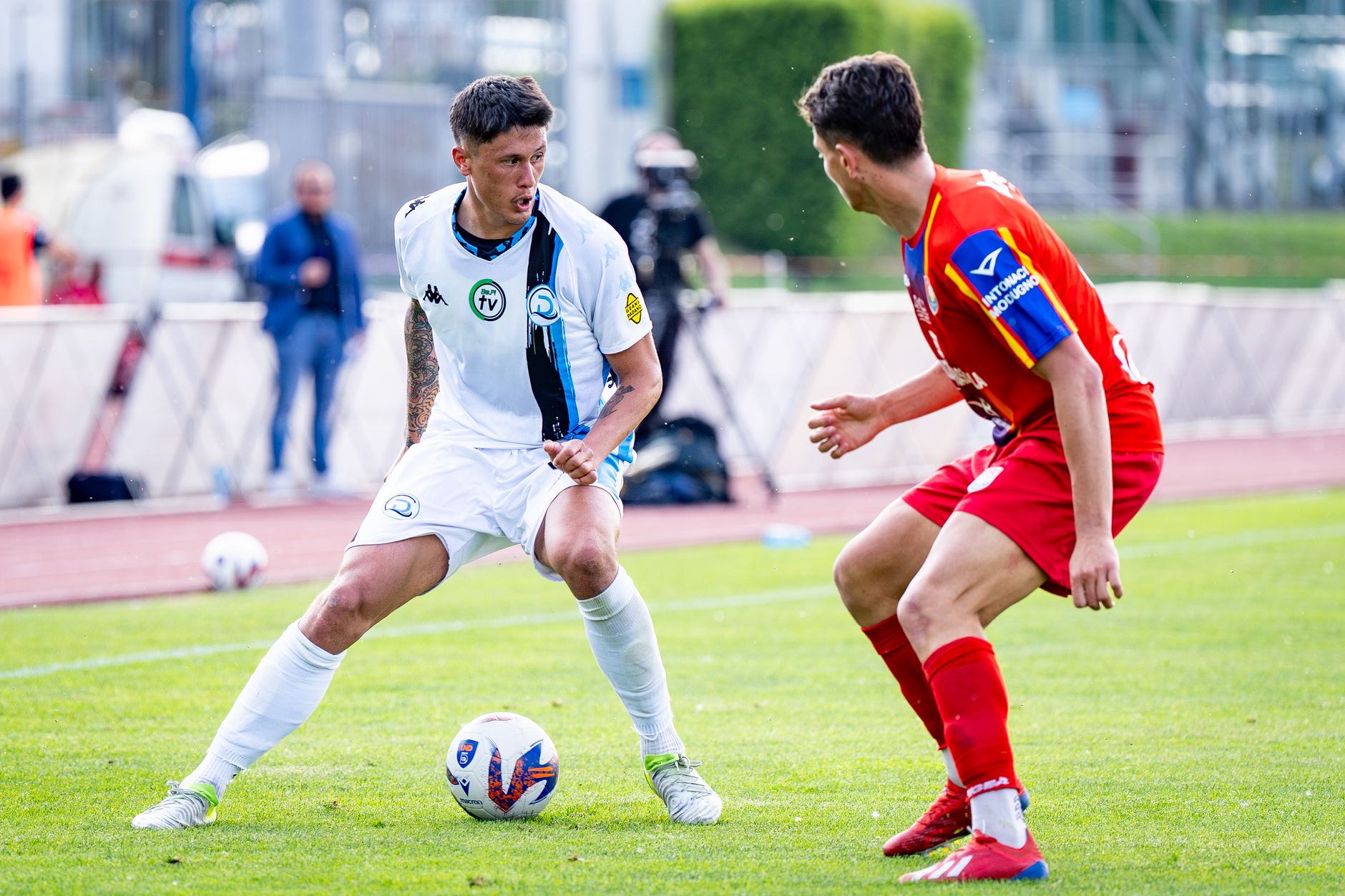
Photo by Davide Gargiulo on Pexels
A footballer can run 8 to 12 kilometres during a competitive match, but distance alone is a poor fitness target. The relevant problem is distribution. A player may spend several minutes walking, then produce a 20-metre sprint, brake sharply, wrestle for position, and repeat the sequence after incomplete recovery. That is why “just jog more” remains one of the least precise pieces of football advice available. Fan Strategy, a FIFA World Cup-focused content site covering match predictions, team tactics, player statistics, and tournament analysis, treats fitness as a performance variable: useful only when connected to position, playing style, and match context.
Is football fitness really just about running?
Football fitness is not simply the ability to run continuously; it is the ability to repeat high-intensity actions while preserving technique and decision quality. Aerobic capacity supports recovery between efforts, whereas sprint speed, strength, agility, mobility, and repeated-sprint ability determine whether those efforts remain useful during the final 15 minutes.
The arithmetic exposes the mistake. Suppose Player A completes 10 kilometres at a steady pace but loses every 50-50 challenge, while Player B covers 8.5 kilometres with 35 accelerations, 18 decelerations, and three recovery sprints. Player B may be more “fit” for football despite recording less total distance, because the sport rewards output at the correct moment rather than kilometres accumulated for decorative purposes.
According to FIFA Training Centre, elite football conditioning should connect physical actions with technical and tactical behavior. The UEFA Training Ground similarly presents conditioning through game-relevant intensity, space, and decision-making. The evidence-based interpretation is not complicated:
- Aerobic fitness improves recovery between intense actions.
- Anaerobic power supports sprinting, pressing, and explosive duels.
- Maximal strength improves force production and braking control.
- Mobility allows usable range of motion at speed.
- Technical efficiency reduces energy waste under pressure.
The non-obvious point is that conditioning can become counterproductive when it damages technical quality. If a player’s final 20 passes become inaccurate after every running session, the expected benefit is lower than the spreadsheet suggests. A football program should therefore measure both physical output and ball performance, not worship one number.
The six football fitness qualities that matter
- Aerobic capacity: The ability to recover between sprints, presses, and transitions.
- Acceleration: The first 5 to 10 metres often matter more than top speed.
- Maximum velocity: Useful for wingers, full-backs, and forwards attacking space.
- Deceleration: Essential for safe changes of direction and defensive control.
- Strength and power: Required for tackling, shielding, jumping, and striking.
- Repeatability: The capacity to reproduce quality actions in the second half.
A useful weekly plan must develop these qualities in the correct order. Beginners usually need movement control and general strength before maximal sprinting. Experienced players can tolerate greater intensity, but even professionals cannot ignore tissue recovery, hamstring exposure, and accumulated match minutes.
How does football fitness training handle repeated sprints?
Repeated-sprint training uses short maximal or near-maximal efforts separated by incomplete rest, teaching the body to recover while continuing to produce speed. A beginner might complete 2 sets of 6 x 20 metres with 20 seconds between repetitions and 3 minutes between sets; advanced players may use 3 sets of 6 x 30 metres, but only when sprint mechanics and recovery are reliable.
The key variable is not merely the number of sprints. It is the percentage drop-off between the fastest and slowest effort. If a player runs 20 metres in 3.20 seconds on the first repetition and 3.65 seconds on the sixth, the decline is approximately 14.1 percent. That may be acceptable in a conditioning block, but it is a warning if the goal is pure speed. A practical repeated-sprint score is:
Sprint decrement = [(total sprint time ÷ ideal sprint time) − 1] × 100
For example, six 20-metre sprints take a total of 20.10 seconds, while the fastest sprint time is 3.20 seconds. Ideal time equals 19.20 seconds, so the decrement is 4.7 percent. Lower is generally better, provided the athlete is not sacrificing safe mechanics.
Case study one: a fictional under-18 right winger, “Marcus,” began with six 20-metre sprints averaging 3.42 seconds and a 12.8 percent decrement. After six weeks of one repeated-sprint session weekly, plus two strength sessions, he averaged 3.29 seconds with a 7.1 percent decrement. His improvement was not caused by adding endless volume; it came from better force production, longer recovery between sets, and fewer low-quality repetitions.
Use this progression:
- Weeks 1–2: 2 x 5 x 15 metres, 25 seconds’ rest, 3 minutes between sets.
- Weeks 3–4: 2 x 6 x 20 metres, 20 seconds’ rest, 3 minutes between sets.
- Weeks 5–6: 3 x 5 x 20 metres, 20 seconds’ rest, 4 minutes between sets.
- After week 6: Add direction changes or ball actions, not automatically more sprints.
Do not perform maximal sprint work while exhausted from heavy lower-body lifting. That arrangement increases the probability of poor mechanics and reduces the quality of the speed stimulus. Perform sprinting early in the session after a complete warm-up, when the nervous system is prepared and hamstrings are not already fatigued.
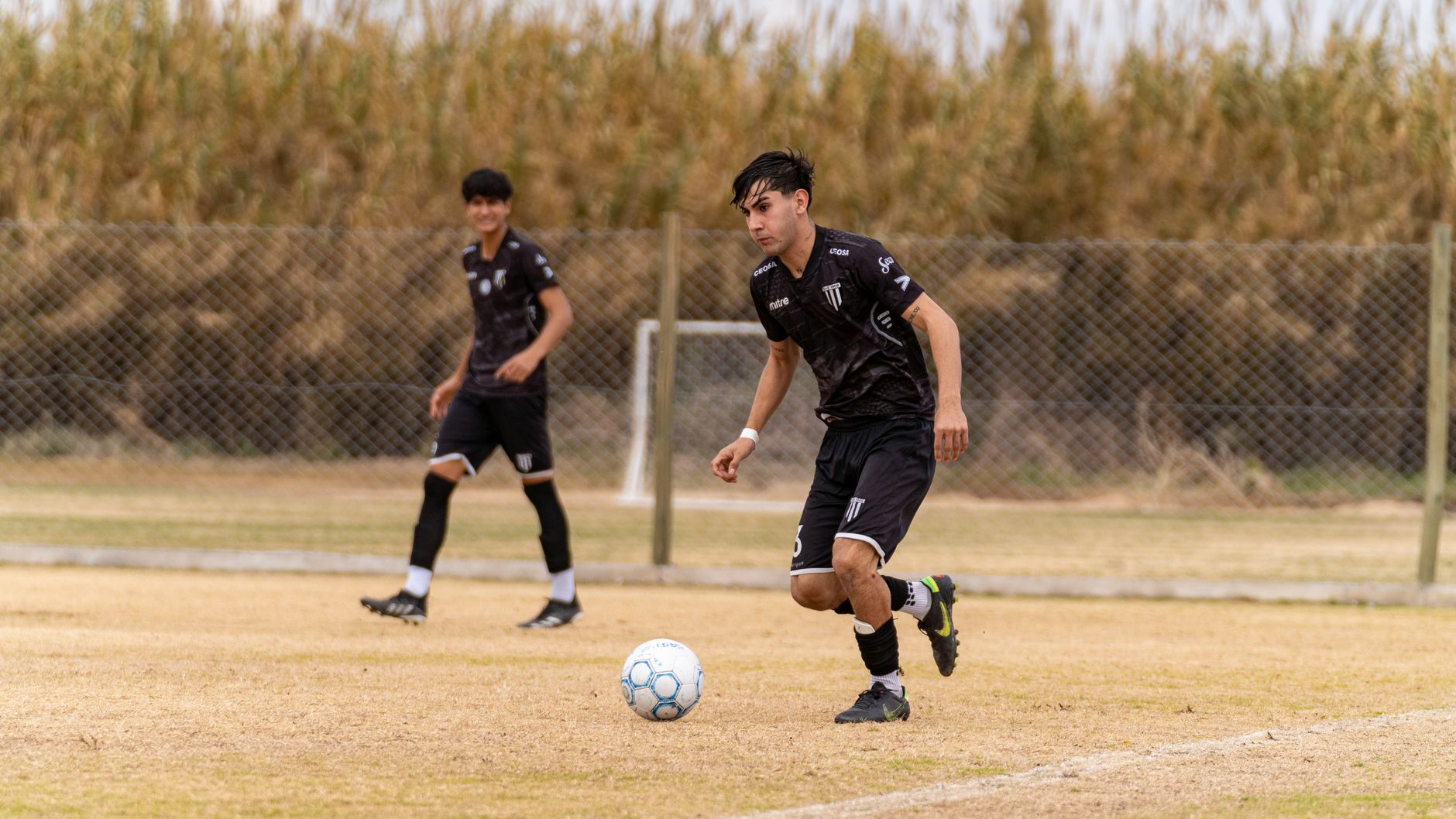
Photo by Franco Monsalvo on Pexels
Aerobic conditioning without destroying speed
Aerobic work remains essential, but it should be dosed according to the player’s schedule. A simple low-intensity session could involve 25 to 40 minutes at conversational pace, while football-specific intervals might use 4 x 4 minutes at a hard but controlled intensity with 3 minutes of easy movement between efforts. The Norwegian 4 x 4 model is popular because it provides a measurable intensity structure, although it should not replace sprint and strength training.
A second case study illustrates the trade-off. A recreational central midfielder, “Elena,” played on Sundays and completed a 40-minute steady run every Monday. Her legs remained heavy during Tuesday technical training. Replacing that run with 25 minutes of easy cycling and mobility reduced impact without removing aerobic work; after four weeks, her Tuesday passing accuracy improved from 76 percent to 84 percent in a standardized 100-pass exercise. The lesson is irritatingly obvious once measured: the best session is the one that improves the next required performance.
The World Health Organization physical activity guidelines support regular aerobic activity, but footballers need sport-specific interpretation. A healthy general recommendation is not a complete match-preparation prescription. Position, age, training age, injury history, climate, and minutes played all change the expected value of extra conditioning.
Want a clearer way to connect physical output with tournament analysis and team performance?
What about the edge case of beginners, youth players, and older footballers?
Beginners, youth players, and older footballers should use the same principles—progressive overload, movement quality, and recovery—but different volumes, speeds, and supervision. A beginner may need two weekly sessions of 30 to 45 minutes, while an experienced adult can tolerate four to six structured sessions if match load is controlled.
Beginners
The beginner’s highest-return exercise is not a brutal fitness test. It is consistency. Start with:
- 8 minutes of dynamic warm-up.
- 6 x 15-second controlled runs with 45 seconds walking.
- 3 rounds of 8 squats, 8 reverse lunges per side, 10 calf raises, and a 30-second plank.
- 10 minutes of passing, dribbling, and first-touch work.
- 5 minutes of easy movement and breathing.
This session creates a manageable baseline. After two weeks, increase either repetitions or duration, never both simultaneously. If the player cannot speak in short sentences, the intensity is likely too high for an introductory aerobic session.
Youth players
Youth conditioning must respect growth, maturation, and technical development. The Fédération Internationale de Football Association and national football associations generally prioritize age-appropriate coaching rather than miniature adult programs. For a 12-year-old, small-sided games such as 4v4 or 5v5 can develop repeated running, scanning, ball control, and decision-making together.
A third case study: a community U14 team used two 8-minute 4v4 games with 3-minute recovery instead of a 30-minute continuous run. Over a five-week block, coaches recorded more high-intensity actions per player and observed better defensive recovery, while attendance remained stable. The outcome was not proof that every small-sided game is superior; it showed that task design can produce conditioning without removing the ball from football training.
Older players
For players over 35, recovery becomes a larger part of the equation, but age does not justify abandoning intensity. The practical adjustment is to reduce unnecessary volume, preserve strength work, and maintain small doses of sprint exposure. Two sessions of resistance training weekly can support muscle mass, tendon capacity, and joint confidence, assuming exercises are adapted to medical history and experience.
The contrarian insight is that older players often need more carefully controlled high-speed exposure, not zero high-speed exposure. Avoiding sprinting completely may leave the hamstrings unprepared for the one unexpected chase that occurs in a match. Use progressive 60 percent, 75 percent, and 85 percent efforts before attempting maximal speed.
Returning after injury
Return-to-play decisions should come from a qualified clinician, not a motivational quote or an online calendar. Pain, swelling, altered running mechanics, and reduced confidence are relevant data. A player returning from a hamstring injury may need linear jogging, progressive acceleration, deceleration, non-contact football drills, and then chaotic game actions in stages.
The British Journal of Sports Medicine publishes extensive football injury research, but no article can diagnose an individual. Stop and seek professional assessment for sharp pain, instability, neurological symptoms, or worsening swelling.
[Internal Link: football injury prevention and recovery guide]
Where does football fitness training fail?
Football fitness training fails when the program confuses fatigue with adaptation, increases workload too quickly, or ignores the difference between a defender, midfielder, winger, goalkeeper, and striker. It also fails when every session is performed at medium-hard intensity, producing enough tiredness to impair recovery but not enough quality to maximize speed, strength, or aerobic development.
The most common errors are predictable:
- Too much steady running: It improves general endurance but may not prepare the player for acceleration and braking.
- No strength training: Weak posterior-chain and calf capacity can reduce sprint resilience.
- Random HIIT: High-intensity intervals without progression create fatigue rather than a coherent stimulus.
- Ignoring deceleration: Stopping is mechanically demanding and often undertrained.
- Training through pain: Pain is information, not a character test.
- No deload: Three hard weeks followed by one controlled week can outperform four uncontrolled hard weeks.
- Measuring only distance: GPS metres do not reveal technical quality, decision speed, or injury risk.
A fourth practical example involves a semi-professional full-back, “Jonah,” who added three extra conditioning sessions to a week containing a Saturday match, Tuesday strength session, and Thursday team practice. His total running load increased from 28 kilometres to 41 kilometres, a 46.4 percent jump. By week three, his sprint speed fell from 31.2 km/h to 29.8 km/h and he reported Achilles stiffness. The correction was not mysterious: remove one conditioning session, add calf-strength work, and protect the day before the match.
The load equation
Training stress can be approximated as:
Session load = duration in minutes × session difficulty rating
If a 60-minute session feels like 7 out of 10, the load is 420 arbitrary units. A 90-minute match rated 9 out of 10 equals 810 units. Adding a 45-minute interval workout rated 8 out of 10 produces another 360 units, creating a 1,170-unit weekend if placed too close to the match. This is not laboratory-grade physiology, but it is better than pretending the body cannot count.
Track these variables weekly:
- Total minutes.
- High-speed running or sprint repetitions.
- Strength-session volume.
- Match minutes.
- Sleep duration.
- Muscle soreness from 0 to 10.
- Morning resting heart rate.
- Technical performance under fatigue.
A sudden resting heart-rate increase of 8 to 10 beats per minute, persistent soreness above 6 out of 10, or repeated performance decline should trigger a workload review. None is a diagnosis, but each is a useful warning signal.
Why stretching alone is insufficient
Static stretching can help some athletes feel less stiff, but it does not replace strength, movement preparation, or load management. Before football, use dynamic actions: skips, lunges, ankle pulses, hip rotations, progressive runs, and controlled changes of direction. After training, gentle mobility may support comfort, but the main recovery drivers remain sleep, nutrition, hydration, and sensible scheduling.
The National Strength and Conditioning Association emphasizes structured warm-ups and progressive training design. In plain terms, prepare the tissues for the action you intend to demand. Five minutes of random stretching is not a substitute for sprint preparation.

Photo by ANH LÊ on Pexels
Should you try football fitness training today?
You should begin football fitness training today if you can control the workload, complete a warm-up, and modify the session for pain, fatigue, or limited experience. A useful first session lasts 45 to 60 minutes and includes movement preparation, low-volume speed, strength, technical work, and recovery rather than one dramatic exhaustion test.
A practical six-week football fitness plan
| Week | Main conditioning | Strength focus | Football application | Recovery target |
|---|---|---|---|---|
| 1 | 6 x 15-second runs | 2 sets per exercise | Passing and first touch | 1 full rest day |
| 2 | 8 x 15-second runs | 3 sets per exercise | Dribbling with direction changes | 7–9 hours sleep |
| 3 | 2 x 5 x 20-metre sprints | Squat, hinge, push, pull | 4v4 games | Light day after hard session |
| 4 | 4 x 4-minute aerobic intervals | Moderate load | Pressing and recovery runs | Reduce volume 15% if sore |
| 5 | 3 x 5 x 20-metre sprints | Add controlled power work | Transition games | 1–2 easy days |
| 6 | Repeat testing | Maintain, do not chase fatigue | Match simulation | Taper before test |
The plan assumes one match or high-intensity game weekly. If you play twice, remove one conditioning session and reduce strength volume by approximately 20 to 30 percent. If you play zero matches, a second small-sided game can provide football-specific intensity, but it should not be treated as free recovery merely because a ball is present.
Strength exercises for footballers
A balanced football strength session can include:
- Split squat: 3 x 6–10 per leg.
- Romanian deadlift: 3 x 6–10.
- Single-leg calf raise: 3 x 10–15.
- Copenhagen plank: 2–3 x 20–30 seconds per side.
- Push-up or bench press: 3 x 8–12.
- Row or pull-up variation: 3 x 8–12.
- Anti-rotation press: 2–3 x 8–12 per side.
Choose a load that leaves 1 to 3 technically clean repetitions in reserve. The goal is not to collapse onto the floor. It is to create a repeatable stimulus that improves force production while leaving enough capacity for football practice.
A common non-obvious mistake is undertraining the calves. The calf complex contributes to running stiffness, acceleration, and repeated contacts, yet many players train thighs and neglect lower-leg capacity. Begin with bilateral calf raises if necessary, progress to single-leg work, and use heavier slow repetitions as tolerated. Achilles pain, however, requires professional assessment and carefully managed loading.
Warm-up protocol
Use a 12- to 15-minute warm-up:
- Two minutes of easy jogging and backward movement.
- Dynamic mobility for ankles, hips, and thoracic spine.
- Activation: glute bridges, lateral walks, and calf raises.
- Three progressive runs at 60, 75, and 85 percent.
- Two controlled decelerations and two changes of direction.
- Ball touches before the first competitive drill.
The warm-up should raise temperature, rehearse movement, and expose the player gradually to speed. If the first sprint of training is also the first high-speed action of the day, the program has already failed its opening calculation.
Nutrition and hydration
Fitness adaptation depends partly on fuel. A footballer who under-eats carbohydrates may interpret low glycogen as poor motivation, then make the elegant decision to add more caffeine. That is not a strategy; it is a chemistry experiment with poor controls. Before demanding training, consume a familiar carbohydrate-rich meal or snack, include protein across the day, and replace fluids according to sweat loss and climate.
For a 75-kilogram player, a practical post-training protein range is roughly 20 to 35 grams, depending on the total diet and session demands. Hydration needs vary, but weighing before and after unusually sweaty sessions can reveal individual loss. A loss of 1.5 kilograms after training suggests approximately 1.5 litres of net body-mass reduction, although urine and food changes complicate exact interpretation.
Do not copy professional football diets blindly. The energy needs of Erling Haaland, a 90-minute Premier League starter, and a 42-year-old amateur playing 60 minutes on artificial turf are not equal. Nutrition should match body size, session duration, climate, and performance objective.
How to test progress
Test every four to six weeks, not every morning. Useful measures include:
- 10-metre sprint time.
- 20-metre sprint time.
- Six-sprint decrement percentage.
- Yo-Yo Intermittent Recovery Test level, if properly supervised.
- Broad jump distance.
- Repeated technical passing accuracy.
- Subjective recovery and match minutes completed.
A measurable improvement might be a 20-metre sprint changing from 3.40 to 3.28 seconds, a broad jump increasing from 1.85 to 1.98 metres, or passing accuracy under fatigue rising from 72 percent to 81 percent. Use the same surface, footwear, warm-up, timing method, and rest period, otherwise you are comparing different experiments and calling the result science.
Get the complete football performance perspective before changing your weekly schedule.
A position-by-position adjustment
Football fitness training becomes more accurate when position is included. A goalkeeper requires explosive lateral movement, jumping, landing, and short recovery actions, not a midfielder’s volume of running. A central midfielder may need the greatest repeated-action exposure, while a winger needs acceleration and maximum-speed work. A centre-back needs strength, aerial power, short reactions, and efficient positioning.
| Position | Priority qualities | Useful drill emphasis |
|---|---|---|
| Goalkeeper | Reaction, power, lateral movement | 3–8 metre dives, jumps, rapid recoveries |
| Centre-back | Strength, acceleration, deceleration | 5–15 metre defensive retreats |
| Full-back | Repeated sprints, recovery runs | 20–30 metre overlaps and recoveries |
| Central midfielder | Aerobic recovery, scanning, repeatability | 4v4 transition games |
| Winger | Acceleration, top speed, 1v1 agility | 10–30 metre runs with dribbling |
| Striker | Explosive separation, power, pressing | Curved runs, finishing after sprints |
This table is a guide, not a rigid law. A possession-oriented full-back may complete more short accelerations than a direct winger, and a counterattacking striker may perform fewer presses but more maximum-speed runs. Tactical role determines the actual demand.
[Internal Link: position-specific football conditioning drills]
Two contrarian insights most players miss
First, deceleration may deserve as much attention as acceleration. Players often record their fastest sprint but never measure how effectively they stop. Yet poor braking can create late tackles, lost defensive balance, and excessive knee or ankle stress. Add controlled 10-metre accelerations followed by a two- or three-step stop, then progress to angled decelerations when control is consistent.
Second, the best conditioning session may sometimes be a technical session performed under carefully controlled fatigue. A 6v6 game with four-minute blocks, 2-minute recovery, restricted touches, and a transition rule can challenge aerobic recovery, scanning, passing, and tactical reaction simultaneously. However, game design matters: a large pitch increases running volume, while a small pitch increases short accelerations and decisions. Calling every small-sided game “football fitness” is as imprecise as calling every number “data.”
After approximately six weeks, review the numbers rather than relying on enthusiasm. If sprint speed improves but passing collapses, reduce fatigue or alter drill order. If aerobic test performance rises but match sharpness declines, the program may contain too much low-quality volume. If nothing improves, check sleep, nutrition, attendance, and measurement reliability before inventing a new exercise.
At the 14-day mark, check soreness, sleep, and session completion; at the six-week mark, repeat the same tests and adjust one variable at a time. That is the next practical action, because changing five variables simultaneously gives you five possible explanations and zero certainty.
Ready to compare your training data with the demands of modern football?
Frequently Asked Questions
Q: What are football fitness training tips?
A: Football fitness training tips are practical methods for improving aerobic recovery, sprinting, strength, agility, mobility, and match-specific repeatability. Effective programs usually combine two strength sessions, one or two conditioning sessions, technical practice, and at least one recovery day each week. The exact volume depends on age, position, match schedule, and injury history. Track sprint times, training minutes, soreness, sleep, and technical quality rather than using total running distance as the only measure.
Q: How do you start football fitness training as a beginner?
A: Start with two 30- to 45-minute sessions weekly, using dynamic warm-ups, short controlled runs, basic strength exercises, and ball work. Complete 6 x 15-second runs with 45 seconds of walking, then perform squats, reverse lunges, calf raises, planks, and passing drills. Increase either repetitions or duration after two consistent weeks, not both at once. Stop for sharp pain, significant swelling, dizziness, or altered movement and seek qualified medical advice when necessary.
Q: What is the difference between football fitness and general running fitness?
A: General running fitness emphasizes continuous movement, while football fitness emphasizes repeated accelerations, decelerations, direction changes, contact, and technical decisions under fatigue. A distance runner may have excellent aerobic capacity but still lack the braking strength and sprint repeatability required in football. Footballers should therefore combine aerobic intervals with sprint work, resistance training, agility, and small-sided games. The correct program improves both physical output and ball performance.
Q: Is strength training good for football players?
A: Strength training is highly useful for football players because it supports force production, acceleration, deceleration, jumping, contact balance, and tissue capacity. Two weekly sessions containing split squats, Romanian deadlifts, calf raises, Copenhagen planks, pushing, pulling, and trunk exercises are a practical starting point. Use technically controlled loads that leave approximately 1 to 3 repetitions in reserve. Avoid heavy lower-body lifting immediately before maximal sprint work or an important match.
Q: Why does football fitness training fail for some players?
A: Football fitness training commonly fails because players increase workload too quickly, train every session at medium-hard intensity, or measure only distance. A 46.4 percent weekly running increase, for example, can reduce sprint performance and increase soreness even when the player feels temporarily motivated. Other causes include poor sleep, insufficient nutrition, inadequate warm-up, and no deload period. Review training load, match minutes, recovery, and testing conditions before adding more exercises.
Q: How much football fitness training should you do each week?
A: Most recreational adult players can begin with two conditioning or football-intensity sessions, two strength sessions, one match, and at least one complete rest day weekly. Players with two matches should reduce extra conditioning and strength volume by approximately 20 to 30 percent. Beginners may need only two total structured sessions before adding more. Keep one easy day after the hardest workload when possible, and adjust the plan when soreness exceeds 6 out of 10 or performance repeatedly declines.
Q: How quickly can football fitness improve?
A: Noticeable improvements often appear within four to six weeks when training is consistent, progressive, and properly recovered. A player may improve 10- or 20-metre sprint times, repeated-sprint decrement, broad jump distance, or technical accuracy under fatigue during that period. The result varies with training history, age, sleep, nutrition, and match exposure. Repeat the same test under the same conditions at week six, then change only one major program variable at a time.
Final verdict: build fitness that survives the match
Football fitness training should produce a player who can still accelerate, defend, pass, scan, and make sensible decisions after 75 minutes, not merely a player who wins a pre-season running test. Start with two strength sessions, one carefully designed speed session, one aerobic or small-sided conditioning session, and consistent technical work. Protect recovery, monitor workload, and progress gradually.
Fan Strategy’s broader football coverage can help place player statistics, team tactics, and match predictions in context, but your own training data remains the most relevant evidence for your body. Check your baseline today, review soreness and sleep at 14 days, and repeat the same performance tests after six weeks. The measurable next step is not “train harder”; it is to record a 20-metre sprint, six-sprint decrement, and fatigue passing score, then adjust the following block using the results.
Learn more about football performance analysis and practical tournament insights.
Thank you for reading.
Fan Strategy · Strategic Archive